
Changes

by Doug Brodie
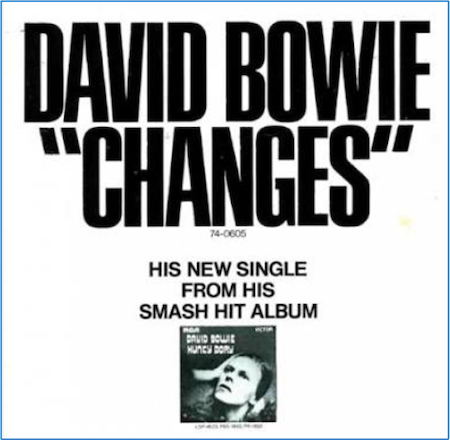
Hunky Dory was released on 17 December 1971, and if you were anywhere near a record shop that Christmas, you will remember it. The opening track was Changes, and the odd thing, given how often it has been played since, is that it went almost nowhere as a single when RCA put it out in January 1972, and only became famous over the years that followed.
A month before the album arrived, on 15 November 1971, Intel launched the 4004, the first microprocessor anyone could actually buy, and the analogue world you and I grew up in quietly began turning digital. So, a song about reinventing yourself arrived just as the world began reinventing itself, and most of us were too busy being teenagers to notice.
From a physiotherapist client:

Always interesting how closely what you see on the money side is exactly what we see on the physical side. Saw a bloke at work recently. 80yo, retired at 65. I asked him if he’d enjoyed retirement:
‘Not as much as I thought I would. I spent years planning to ensure I had enough money. But I never planned what I was going to do. So I have more money than I need and I haven’t done much.’
I am writing about changes this week because retirement is one long run of them, and in my experience the ones that go wrong are seldom the dramatic ones; far more often they are the small ones that nobody got round to checking. So here are four, starting with the cheapest and most profitable change that most of you have never made.
[1] The National Insurance gap check: £956.80 and what it buys
The full new State Pension for the current tax year, 2026/27, is £241.30 a week, which is £12,547.60 a year. You need 35 qualifying years of National Insurance contributions or credits to get all of it, and at least 10 to get any of it. Each qualifying year is therefore worth one thirty-fifth of the full amount, and the sum is worth doing on paper:
£241.30 divided by 35 = £6.894 a week per qualifying year, call it £6.89
£6.89 multiplied by 52 = £358.51 a year per qualifying year
That £358.51 is paid for life, rises every April under the new-fangled double lock, and comes with no investment risk whatsoever. It is taxable, as all State Pension is, and I will come back to that.
The reason this matters to our readers, in particular, is that the people most likely to be short of 35 years are exactly the people reading this. Career breaks to raise children before the credits system was properly joined up, a few years working abroad, early retirement at 58 or 60 with the last few years never filled, periods of self- employment where the Class 2 payments were somehow never made, and above all the contracting out years. If you were in a final salary scheme, or a personal pension that contracted you out of SERPS or the State Second Pension, you paid lower National Insurance at the time, and when the new State Pension was introduced in April 2016, a deduction was made from your starting amount to reflect that. The practical result is that plenty of people with 40 years on their record still do not get the full £241.30, and the only years that can push them up towards it are years added after April 2016, whether by working or by paying voluntarily. Years before 2016 may add nothing at all, which is why you check before you pay.
Filling a gap year is done with voluntary Class 3 contributions. For 2026/27 the rate is £18.40 a week, so a full year costs £18.40 multiplied by 52, which is £956.80. You can normally go back six tax years, so this year you can fill gaps from 2020/21 onwards. The special window that let people fill years all the way back to 2006 closed on 5 April 2025, and I mention it only because there are still articles floating about online suggesting it is open, which it is not. One further change from 6 April 2026 is that time spent abroad can no longer be covered with the cheaper Class 2 rate; it is Class 3 or nothing.
Margaret, 63, four years short
Margaret retired early from the NHS at 60, spent four years in the late 1990s living in Spain, and has just checked her forecast on the Government Gateway for the first time. It shows 31 qualifying years and a forecast of £213.72 a week, which is 31 thirty-fifths of £241.30. She reaches State Pension age at 66 in 2029. Her record shows three fillable gaps within the six-year window, and she is not working now, so this year will be a gap as well unless she does something about it. She decides to fill four years and reach 35.
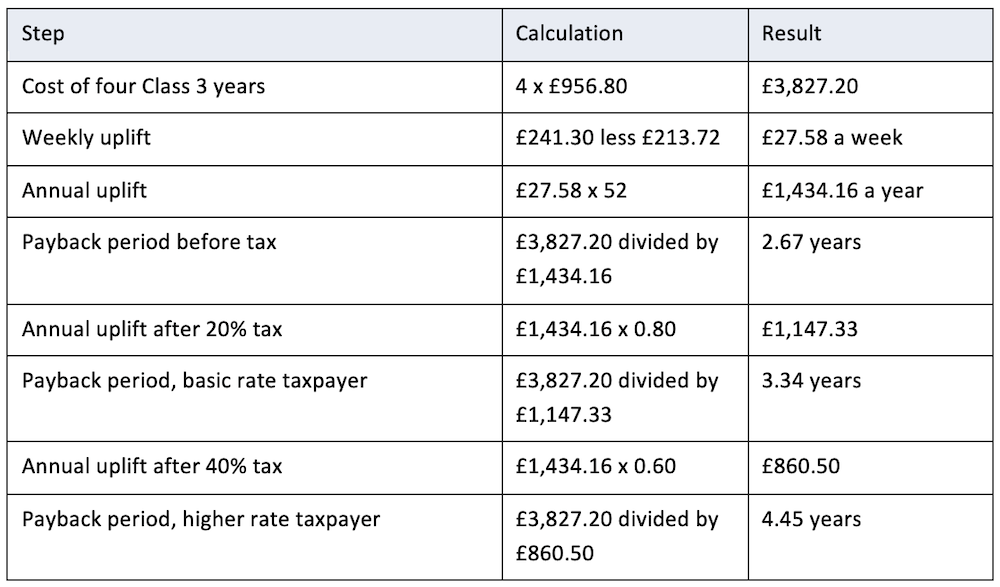
So Margaret gets her money back in a little over three years as a basic rate taxpayer, and if she lives to 86, which the actuaries would regard as unremarkable, she will have collected £1,434.16 multiplied by 20, which is £28,683 before tax and before any double lock increases, from an outlay of £3,827.20. Nothing we could buy for you gets anywhere near that, and we are, as you know, rather keen on investment trusts.
A few cautions before you reach for the cheque book. The main one is to check before you pay, because a year that adds nothing to your forecast is £956.80 thrown away, and the contracting out deduction catches people out all the time. HMRC now has an online tool that shows the exact cost of each year and the exact increase it buys, and the Future Pension Centre will talk you through it if the screen is confusing.
If you are still working, the current year will probably fill itself, so look at the years still to come before you start paying for the ones that have gone. If you are already past State Pension age, you can usually still fill years within the six-year window, although the uplift runs from the date you pay rather than being backdated. And if your retirement income is low enough that you may qualify for Pension Credit, extra State Pension can reduce what you receive from the other side, so that sum needs doing properly as well.
[2] Three buckets: how to stop one bad year becoming a bad retirement
While you were working, a bad year in the markets was an irritation. Your salary kept arriving, your contributions kept going in, and you bought more units or shares at lower prices without thinking about it. In retirement, the arithmetic reverses, because you are now a seller rather than a buyer, and selling units into a falling market is the one thing that does permanent damage to a pension pot. The technical name is ‘sequence of returns risk’, and the point is simply that the order in which returns arrive matters enormously once you are drawing money out. Two retirees can experience exactly the same average return over twenty years and finish with very different sums depending on whether the bad years came first or last.
Robert and Jean, and a bad three years
Robert and Jean have a £400,000 pension pot and need £20,000 a year from it on top of their two State Pensions. Imagine the markets have a wretched patch in their first three years: down 30% in year one, down a further 10% in year two, and up 60% in year three, which, if you multiply it through, lands the market roughly back where it began. One version of the couple holds everything in shares and sells £20,000 of units each year to live on. The other holds £40,000 in cash, enough for two years, and £360,000 in shares.
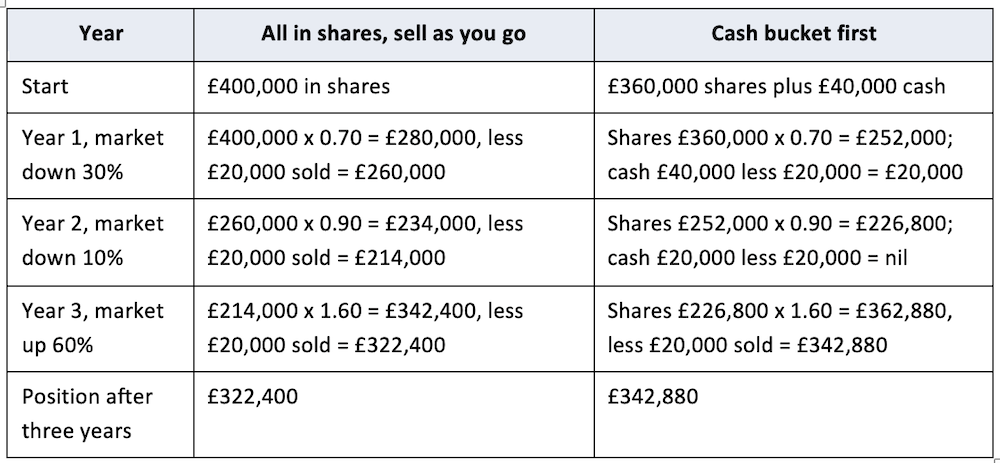
The difference is £342,880 less £322,400, which is £20,480, and it has arisen purely from where the first £40,000 of spending came from. Both couples spent the same money and both held the same shares, but one of them sold 7% of their units at 70p in the pound and another slice at 63p, and those units are gone for good. The gap does not close afterwards, because the missing units would have gone on earning for the rest of their lives.
That is the whole case for what the industry calls a bucket strategy. In its usual form, it has three tiers:
Bucket one holds eighteen months to two years of spending in cash and money market funds, so that no share ever has to be sold in a hurry
Bucket two holds three to five years of spending in short-dated gilts and bonds, or in income paying funds, which can be drawn on in a long bear market and used to refill bucket one
Bucket three holds the long-term money in global equities, which is the only asset that has reliably beaten inflation over the thirty years a retirement can now last
I have a quarrel with the way this is usually sold to retirees, and it is one you will have heard from me before. The standard version assumes bucket three is a growth portfolio that pays almost nothing, so bucket one empties and has to be topped up by selling shares whenever the planner judges the moment to be right, and that judgement is the weak link in the whole arrangement.
Our research on chancerylane.net has argued for years that a portfolio built for natural income, dividends and interest paid out in cash, solves most of the problem on its own, because the income arrives whether the share price is up or down. If Robert and Jean's £360,000 had been producing, say, 4% in natural income, that is £14,400 a year flowing into bucket one regardless of the market, and the real shortfall to be covered from cash would have been £20,000 less £14,400, which is £5,600 a year. Their £40,000 cash bucket would then have lasted [£40,000 divided by £5,600], which is just over seven years, rather than two.
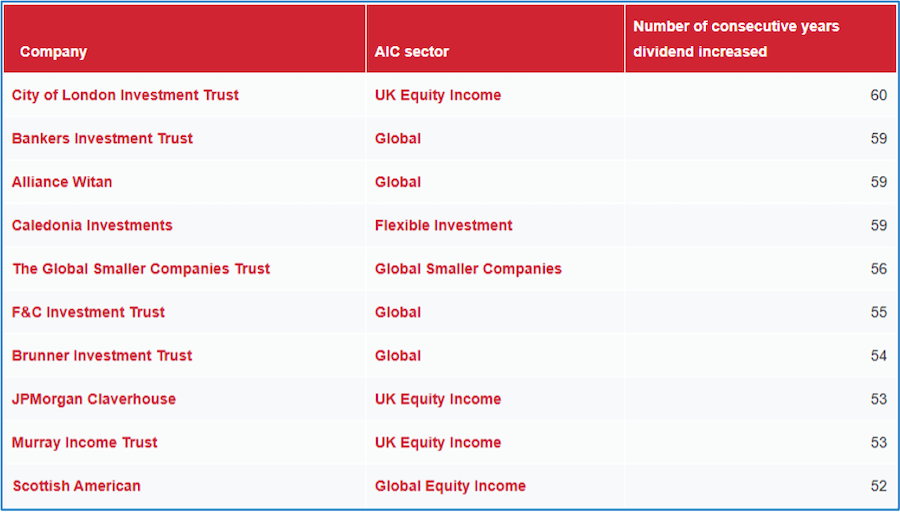
Ten UK investment trusts have raised their dividend every year for more than half a century, including through 1974, 1987, 2008 and 2020, and that record is the foundation we build on. Dividends can be cut, and some were in 2020, but a cut of a few per cent is a very different thing from being forced to sell units at 63p. Across a mixed portfolio of several trusts, none of our clients saw their income fall in 2020.
[3] Changes: from ‘command and control’ to portfolio life
Bowie never stayed anywhere long. Within five years of Hunky Dory he had been a spaceman, a soul singer and a Berliner, and the song that opened that album was, among other things, a manifesto for refusing to be one thing forever. I meet a surprising number of people in their sixties who feel the same way, and who have discovered, usually about four months into retirement, that they never wanted to stop thinking. What they wanted was to stop answering to a line manager (‘that’ boss) and to stop being responsible for other people's mistakes.
The modern answer is a portfolio life: a day or two a week consulting for the industry you spent forty years in, a charity trusteeship, perhaps a non-executive seat on a small company board. It suits a great many people, and it comes with some tax plumbing worth understanding, because the UK system treats earned income after State Pension age rather kindly, provided you keep an eye on a few things.
Once you pass State Pension age, you no longer pay National Insurance on your earnings. Employees stop paying Class 1 immediately, and the self-employed stop paying Class 4 from the start of the tax year after reaching State Pension age. Your employer, if you have one, still pays theirs.
Income tax carries on as before, which is where it bites. A full new State Pension of £12,547.60 a year uses up almost the whole of the frozen £12,570 personal allowance on its own, so every pound of consulting income is taxed from the first pound, and a few good months can tip you into the 40% band above £50,270.
If you are earning well and do not need the State Pension yet, you can defer it. For every nine weeks of deferral the eventual pension rises by 1%, which is just under 5.8% for a full year, and the uplift is for life. On £241.30 a week, a year's deferral adds about £13.99 a week. The breakeven is roughly seventeen years, so this is a decision for the healthy and the well paid rather than everyone. In general, it’s better to take the money on offer, when offered.
Consulting income counts as earnings for pension purposes, which means you can still make pension contributions with tax relief up to the age of 75. The important caveat is that if you have already taken flexible income from a pension, the money purchase annual allowance limits you to £10,000 a year of contributions, and HMRC takes a dim view of anything that looks like recycling tax-free cash.
On structure, most people are best served as a sole trader with a separate bank account and a good accountant, and the first £1,000 of trading income each year is covered by the trading allowance in any case. A limited company only earns its keep once the income is substantial, and if your client is a medium or large business, the off payroll working rules, which you will know as IR35, mean they decide your tax status rather than you.
Charity trustee roles are almost always unpaid, which makes them tax efficient by definition, and the Charity Commission register lists vacancies. The time commitment is nearly always larger than advertised, so ask to see the last year's board papers before you say yes.
The thing that goes wrong is scale, because a day a week becomes two, a favour for a former colleague becomes a retainer, and eighteen months later the hobby is a forty-hour job without the pension contributions, the holiday pay or the ability to say no. The people I see manage this well set two boundaries at the start and write them down: a fixed number of days a month, and a review date once a year at which the whole thing can be stopped without anyone being embarrassed. They also decline, politely and without exception, anything that comes with a line manager attached. Lastly - usually, it’s not about the money; if it was, you’ve probably retired too early.
There is a counterweight to all of this, and I raised it in this morning's email. A portfolio life is one way of keeping the mind busy, and for many people it is the right one, but it is a choice rather than an obligation, and the writer who calls himself The Old Grey Thinker on Substack makes the opposing case rather well, which is that the real prize of retirement is the freedom to take the slow road and to be fascinated by old maps or the behaviour of birds without anyone asking what it is for. The honest test of a consulting day is whether it earns its place against a morning spent on something gloriously useless, and that is a test only you can set.
[4] Reader tool: the NI year cost-benefit worksheet
Enough of the theory: at the bottom of this article is a worksheet, with the screenshots from the HMRC and DWP screens you will be looking at, which takes you through the check in about twenty minutes with a cup of tea and a gingernut.
The steps, in short, are these:
Sign in to your Government Gateway account, or create one, at gov.uk/check-state-pension. You will need your National Insurance number and a passport or driving licence to prove who you are. (Patience required if you are not up to speed with your ‘gateway’).
Read your State Pension forecast. Note two numbers: the estimate based on your record to date, and the forecast if you continue to contribute until State Pension age. If the second number is £241.30 a week, you are already on course for the full amount and can stop here.
Open your National Insurance record. Years marked as not full are your gaps, and the screen will tell you which of them you are still able to fill and the cost of each one.
Use HMRC's online tool for checking whether voluntary contributions will increase your pension. It shows, year by year, what each payment would add to your forecast. This is the step that catches the contracted out problem, because it shows you plainly which years would add nothing.
Do the sum on the worksheet: cost of the years you intend to fill, weekly and annual increase, payback period before and after tax at your own rate.
If anything on the screen is unclear, or if you were contracted out for any part of your career, ring the Future Pension Centre before paying. Their job is to tell you whether a payment is worth it, and they are good at it.
Pay through the Government Gateway. Keep the confirmation. Check the record again after eight weeks or so to see that the year now shows as full.
If you would rather we did it with you, that is exactly the sort of thing we do in the Income Discovery Meeting, and it costs nothing.
So, ch-ch-changes
The point of Bowie's song, if a three-minute pop record can be said to have a point, is that the changes come whether you are ready for them or not, and the people who do best are the ones who get there first. The microchip in your phone can do every sum in this article in a fraction of a second, so the hard part has never been the arithmetic; it has been sitting down to do it.
Four changes, then, before Christmas:
check the National Insurance record,
build the cash bucket and let the natural income keep it topped up,
write down the two boundaries before the first consulting day, and
have the conversation about what the next ten years are actually for.
If any of this has made you put down the toast, that is precisely the feeling that should prompt a phone call. We will not panic you into anything, because we do not do that, but an hour of our time costs you nothing and a missed deadline on 5 April can cost you £358 a year for the rest of your life.
Book a no-obligation Income Discovery Meeting
020 7390 0670
Two hours, both spouses, no jargon, no pitch. We bring the coffee. You bring the questions, the pension statements and, if you can find them, your Government Gateway login.
🧠 Grey Matter Workout: the answer
Question: Divide 30 by half and add 10 - What number do you get?
Answer: 70
In strict mathematical terms, "dividing by half" means dividing by 0.5. So:
30 ÷ 0.5 = 60
60 + 10 = 70
About the author
Doug Brodie is Founder and CEO of Chancery Lane Income Planners. He has specialised in retirement income for over thirty years and is Chartered with both the CISI and CII. This article is general information and not personal advice. Tax rules can change, and the impact of any planning depends on your specific circumstances. Capital is at risk and past performance is not a guide to future returns.