
Wish You Were Here: The Psychological & Practical Shift of Leaving the Machine


by Doug Brodie
In September 1975, when Pink Floyd dropped needle onto vinyl with Wish You Were Here, Roy Harper sang Roger Waters’ blistering line with effortless cool:
"Welcome to the machine. Where have you been? It’s alright, we know where you’ve been."
For forty-odd years, we knew precisely where we were. We were on the 07:18 into Waterloo, Euston, or Piccadilly. We were running divisions, weathering recessions, surviving the three-day week in our teens, navigating 15% mortgage rates in our thirties, and dragging corporations kicking and screaming out of paper ledger books and into the internet age.
We built careers that defined who we were.
Now, standing on the precipice of retirement, the quiet reality arrives: The machine keeps humming without you.
Retirement is pitched by mainstream adverts as an endless Tuesday morning coffee overlooking an olive grove in the Dordogne. But anyone who has actually lived a full working life knows that abrupt deceleration does not feel like freedom; it feels like stepping off an express train doing ninety miles an hour onto a quiet, overgrown platform, the only thing moving is the station clock, and it’s all silent now. Everyone’s got to work except you.

If you are going to make this transition properly, you need more than vague optimism. You need a clear-cut pension strategy, mathematically sound withdrawal mechanics, and a robust psychological framework.
Here is how we take the controls.
[1] The PCLS Conundrum: Don't Let "Tax-Free" Blind Your Maths
The moment you tell HMRC or your pension administrator that you’re wrapping up, the first thing placed in front of you is the Pension Commencement Lump Sum (PCLS) - your entitlement to take up to 25% of your defined contribution pot tax-free (capped at £268,275 under current Lump Sum Allowance rules).
The instinct among many of our generation is Pavlovian: Take it all immediately before the Treasury moves the goalposts.
Taking your full 25% lump sum on Day One simply because the taxman allows it is often an expensive emotional mistake. Don’t move cash out of an untaxed pension account into a taxed bank account.
The Problem of "Cash Drag"
Unless you have an immediate, capital-intensive liability - clearing the remainder of an interest-only mortgage, helping a child onto an absurdly inflated UK property ladder, or completing major structural renovations on your home - crystallising that full 25% moves money out of a tax-sheltered, compounding environment and dumps it into the real world.
In a flexible drawdown SIPP, your underlying investments and cash grow free of UK Capital Gains Tax and income tax.
If you pull £200,000 in cash into a high-street deposit account or cash ISA:
You can only shelter £20,000 per tax year into a cash or stocks & shares ISA.
The rest sits exposed to interest tax (remembering the meagre £1,000 Personal Savings Allowance for basic rate taxpayers, or £500 for higher rate).
Inflation relentlessly erodes purchasing power.
The Strategic Alternative: Phased Crystallisation
You do not have to swallow the 25% in one gulp. With uncrystallised funds pension lump sums (UFPLS) or phased drawdown, you can crystallise tranches over multiple tax years, as you actually need capital.
Each withdrawal is treated as 25% tax-free and 75% taxable income. By drawing only what you intend to spend, the remainder stays inside the wrapper, compounding undisturbed.
[2] Bengen Was in California: Why the "4% Rule" Needs Guardrails in Britain
Most financial literature hands you a comfortable, tidy equation: Bill Bengen’s famous 1994 "4% Rule." Take 4% of your starting pot in Year One, adjust that nominal pound figure annually for inflation, and you’ll never run out of money over a 30-year span.
There are two major flaws with treating that as holy writ in the UK:
Bengen modelled his rule on historical US market performance (large-cap S&P 500 and intermediate US Treasuries).
Human beings do not spend money in neat, inflation-adjusted straight lines.
Golden Rule: If you want to set your retirement income on day one and walk away forever, use an annuity (and don’t complain about the loss of all your capital).
Note: Chancery Lane Research has authored a recalculation of Bill Bengen’s paper using UK equities, gilts and RPI. It forms part of the 2026 white paper update.
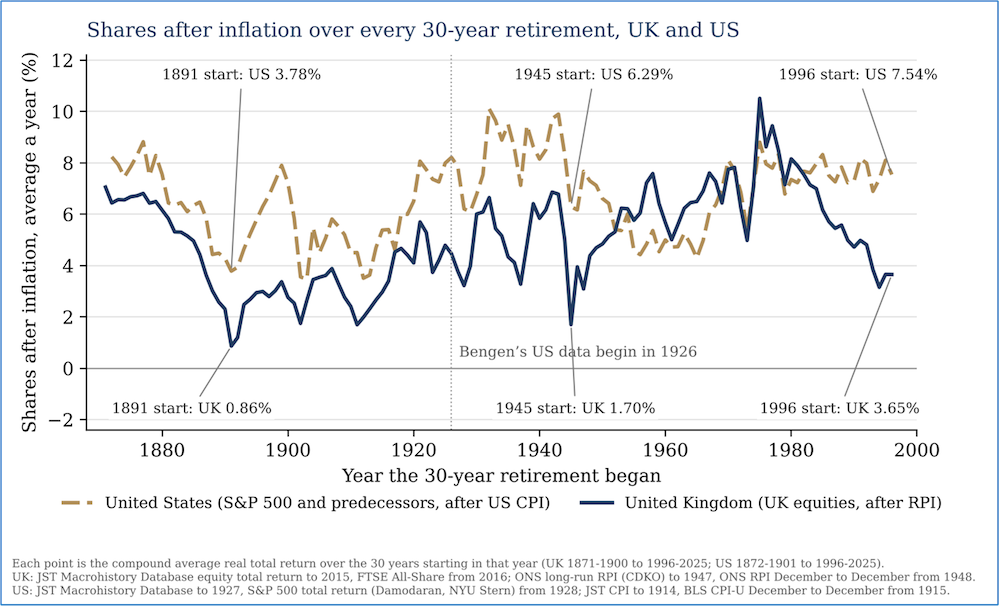
If you retire into a bear market - a repeat of 1973-74, or 2008 - taking a rigid, inflation-uprated 4% forces you to liquidate units at distressed prices to meet your income target. This is Sequence of Returns Risk, and it is the single greatest destroyer of wealth in the first five years of retirement.
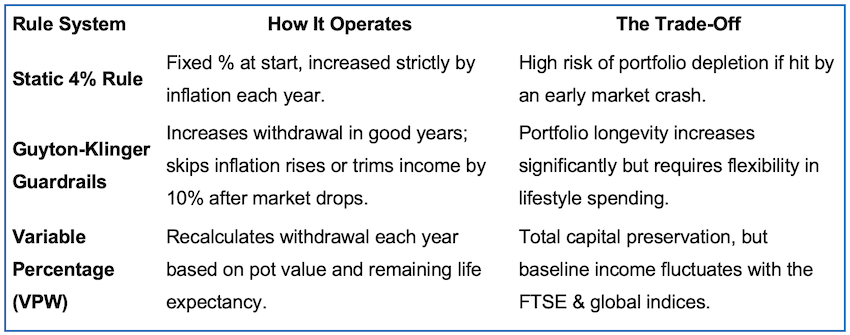
As thoughtful managers of our own balance sheets, we adopt dynamic guardrails. If global equities take a 15% hit, you do not award yourself an inflation bump on discretionary spending; you lean on cash buffers, trim the lavish trips, and let the portfolio recover without forced selling.
[3] "Welcome to the Machine": Structuring the Blank Slate
Let's address the part the wealth managers never discuss: Identity Shock.
When you spend forty years in leadership, management, or technical expertise, work provides five non-negotiable psychological anchors:
Enforced Time Structure (the alarm, the commute, the deadlines).
Social Interaction (banter, debate, lunches, shared commiseration).
Collective Purpose (shipping a product, closing a deal, fixing a crisis).
Status & Reverence (people answering your emails, listening when you speak).
Cognitive Friction (complex problems demanding mental horsepower).
When you leave, those five struts vanish overnight. By week twelve, your golf handicap might drop two strokes, and the garden shed is impeccably tidy, but the silence can be deafening.
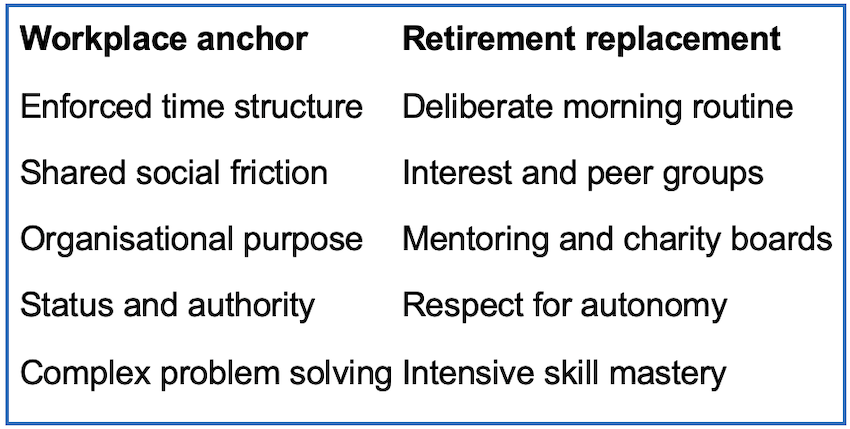
You must design a weekly operating rhythm before you step down.
Do not leave Monday through Friday completely blank.
Schedule non-negotiable fixtures: two mornings of focused intellectual pursuit (a non-executive board role, charity trusteeship, or deep writing, studying or learning), three afternoons of structured physical training (Parkrun on Saturdays), and protected time for personal projects.
You are not retiring from work; you are assigning yourself to a new portfolio where you are the sole client.
[4] Reader Tool: The Phased PCLS Decision Matrix
Golden Rule: If there was a time to use a qualified financial planner, that’s now.
Before signing the paperwork with your SIPP provider, run your capital needs through this quick framework to see whether you should take the lump sum now or leave it sheltered.
1. Audit Immediate Capital Liabilities
List any high-interest debt, impending capital expenditures (e.g., replacement vehicle, roof overhaul), or mortgage balances maturing in the next 12 months. If this sum is less than 10% of your pot, taking the full 25% upfront creates unnecessary cash drag.
2. Calculate Your Real-World Cash Burn
Establish your non-discretionary baseline spending (council tax, energy, food, vehicle) versus discretionary spending (holidays, dining, gifts). Determine how much of the baseline is already covered by guaranteed income (State Pension, Defined Benefit schemes, annuities, rent, interest, part-time work).
3. Assess Tax Shelter Capacity
Can the withdrawn capital be immediately re-housed inside your or your spouse's £20,000 annual ISA allowance? If the answer is no, pulling excess cash leaves capital exposed to dividend and savings taxes outside the pension wrapper.
4. Choose Your Crystallisation Method
If you do not need capital today, elect for Phased Drawdown or UFPLS. Draw only the tax-free element required to top up your annual income allowance, keeping the remainder of your wealth compounding free of Capital Gains Tax.
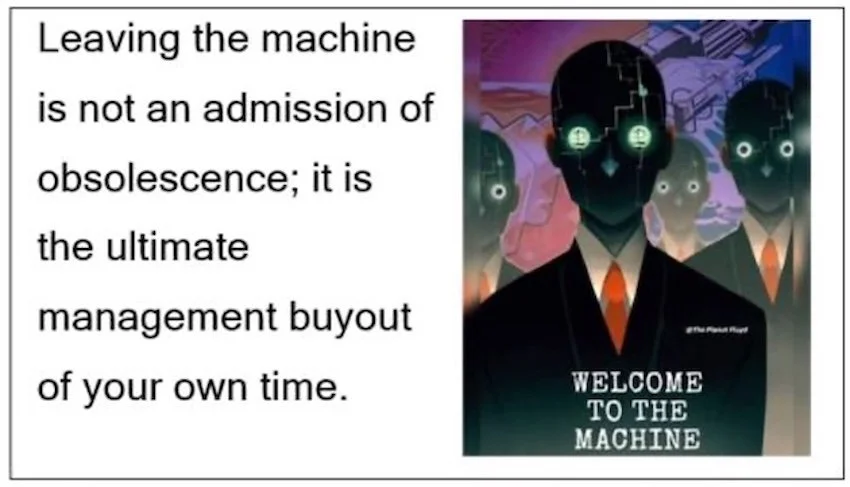
Leaving the machine is not an admission of obsolescence; it is the ultimate management buyout of your own time. Treat your decumulation phase with the same strategic rigour, scepticism of received wisdom, and independent spirit that got you through the seventies, eighties, and beyond.
Next week we’re putting on Hunky Dory, and covering NI and the state pension gap, mitigating the toxic sequence risk, ch-ch-changes from ‘Command & Control’ to non-exec and observer, and the NI cost-benefit calculator.
Shine on you crazy diamonds.
🧠 Grey Matter Workout: the answer
Question: Pink Floyd's 1967 psychedelic debut album, ‘The Piper at the Gates of Dawn’, took its title from a specific chapter of which classic piece of British literature?
A. Alice's Adventures in Wonderland
B. The Lord of the Rings
C. The Wind in the Willows
D. Peter Pan
Answer: C. The Wind in the Willows
Syd Barrett borrowed the title directly from Chapter 7 of Kenneth Grahame’s 1908 book.
About the author
Doug Brodie is Founder and CEO of Chancery Lane Income Planners. He has specialised in retirement income for over thirty years and is Chartered with both the CISI and CII. This article is general information and not personal advice. Tax rules can change, and the impact of any planning depends on your specific circumstances. Natural income is not guaranteed and dividends can be reduced. Capital is at risk and past performance is not a guide to future returns.