


by Doug Brodie
In this blog:
[1] Fast lane? Here’s a plane you might afford to buy - then there’s the rest.
[2] Fast lane? The Fleetwood Mac Tour trap
[3] Fast lane, no time? Here’s how AI compared tracker v trust income volatility
[4] Fast lane, quick answer? Here are the simple facts on using total return for income
[1] It’s only money, isn’t it?
You know you’ve made a right decision once you know what a wrong decision looks like. A good 90% of our clients can afford to buy a plane, however, we know that in the main, that’s the wrong decision. Same goes for a lot of boats.
There’s a point for you in this, so bear with me…
If you live in Devils Lake, North Dakota or Clayton, New Mexico, you are literally over 1,000 miles from many interesting cities where you might do business, have family or like to play, so like a 20,000-acre farm in Australia, it could make financial sense to have your own plane. If you live in Hemel Hempstead… not so much, but hey, one life only, so pour quoi pas?
For ‘just’ £730k, how about a Piper Meridian - it’s pressurised and can fly 5 passengers above the weather at 30,000 feet, only needs a single pilot. It’s a turboprop and will cruise at 300 mph. A range of almost 2,000 kilometres takes you to Iceland or Sicily (that’s a long way with no loo on board).
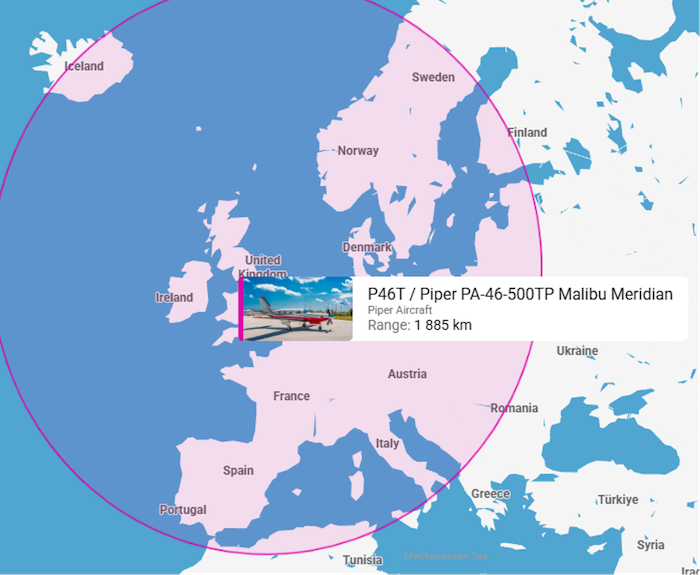
Buying it is one thing, however, the estimated annual cost for 325 hours of flying comes to £400,000, covering compulsory maintenance, fuel, landing fees, etc. So maybe not. And if you think your last MOT was expensive? Try this for size:

Like the car sitting underused and depreciating on your driveway, there is an alternative: a similar charter for 5 people, return London to (say) Biarritz is around £16,000 (£3,200 each). Geneva is roughly the same, or fly to Geneva one way for around £1,600 per person, then get the train back.
I have debated with my chum Steve the cost of replacing our respective ‘big’ family cars; we balk at the £40-£60k cost and have decided, like the example above, that luxury Ubers/taxis and upgraded hire cars are a much more sensible approach - you have the luxury transport AND you have a driver. Wealth is what you don’t have parked on your drive or sitting in a jewellery box.
[2] The Fleetwood Mac Tour Trap
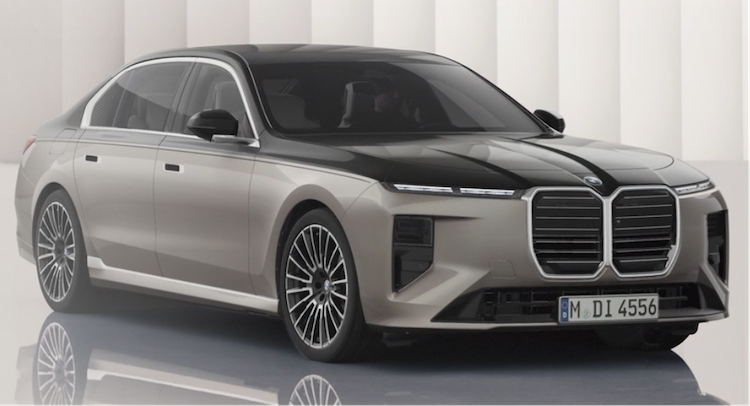
The top of the range BMW costs you £125,000 or you could just pay Uber £58 to take you home from the theatre, and let them take care of the insurance, maintenance, tax and depreciation. It’s beautiful to ride in, I got out at home (having had a wee snifter), and a man took it away for me. How convenient.
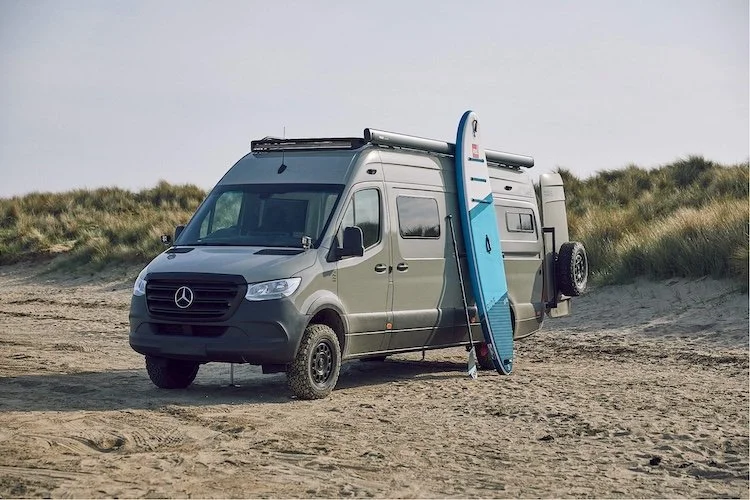
Every boomer knows the daydream: you sell up or take your lump sum, buy a whitewashed fisherman’s cottage in Padstow or St Ives - or an £85,000 A-Class German motorhome - and spend your sixties living out a sun-drenched 1977 fantasy.
Before you sign the conveyancing forms, look at the wallet-haemorrhage waiting for second-home buyers in 2026:
The Stamp Duty Surcharge: buying a £450,000 coastal bolt-hole in England as an additional property triggers the higher-rate Stamp Duty Land Tax (SDLT) surcharge - handing HMRC £32,500 upfront dead money before you’ve bought a kettle.
The 200% Council Tax Penalty: under the Levelling Up and Regeneration Act powers now enforced by councils from Cornwall to North Norfolk and Gwynedd, second homes face a 100% Council Tax premium - meaning you pay double Council Tax (200%) on a property you only occupy for eight weeks a year. (And now that the old Furnished Holiday Let tax regime has been abolished, you can’t easily offset mortgage or capital costs against tax either).
Capital Lockup & Opportunity Cost: Tying up £450,000 in bricks and mortar sacrifices £21,150 per year in lost 4.7% natural investment income. Add £4,800 in double council tax, £3,500 in coastal maintenance, and £1,800 in utilities/insurance, and your cottage costs you £31,250 a year - or £3,900 per week if you visit for two months a year. (Hmmm.)
The Antidote: Rent Luxury, Own Yield.
Take an Uber-Lux. Upgrade your rental. Go business class.
Keep your £450,000 compounding inside your tax-sheltered wrappers. Take £15,000 a year of the natural yield to rent five-star villas in Tuscany, boats in Vass, cottages in Cornwall, or luxury campervans wherever the sun is actually shining - and hand the keys back when the boiler breaks.
[3] Here’s how AI compared tracker v trust income volatility
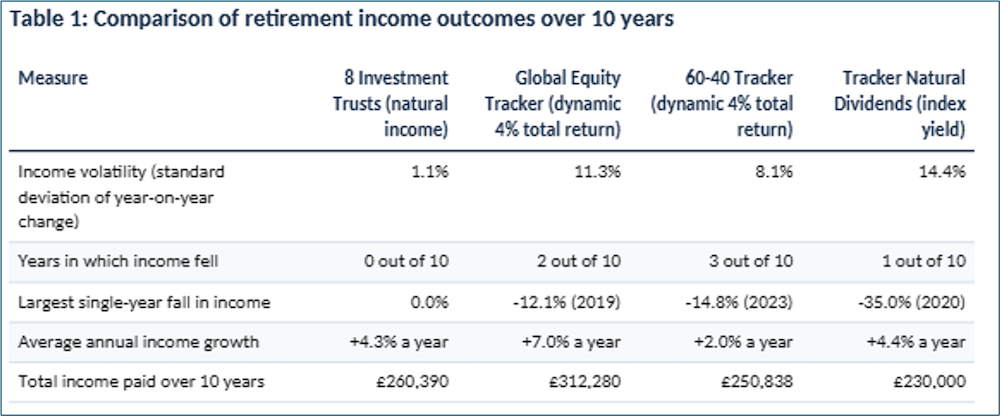
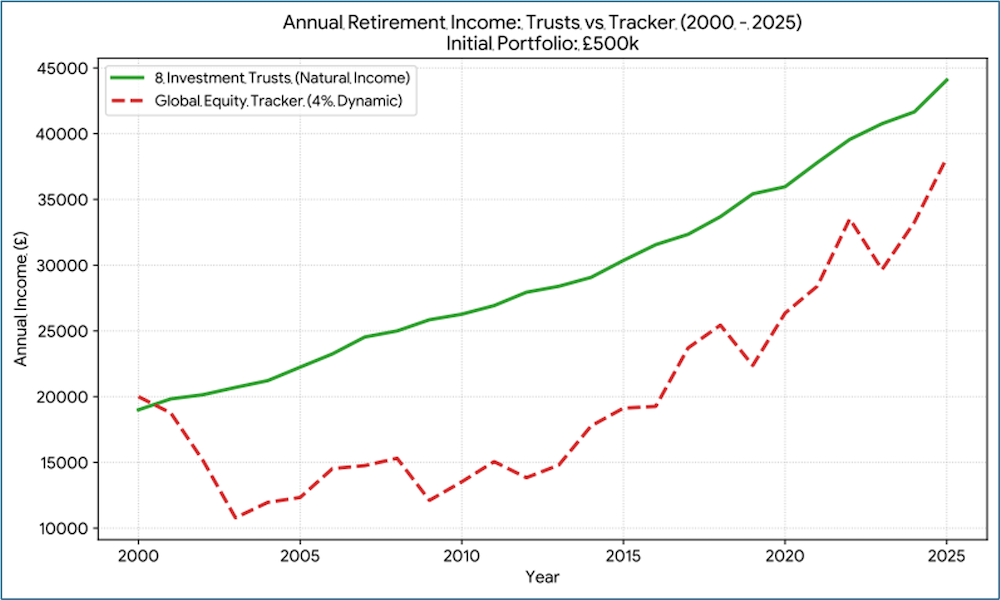
The Natural Income Portfolio (8 AIC "Dividend Hero" Trusts):
An equally weighted basket of eight long-standing investment trusts: City of London (CTY), Bankers (BNKR), Alliance Trust (ATST), F&C (FCIT), Merchants (MRCH), Murray Income (MUT), JPMorgan Claverhouse (JCH), and Scottish American (SAINTS). In this portfolio, the investor spends only the cash dividends paid into the account, never selling any shares.
The Total Return Tracker Portfolios:
Invested in low-cost index trackers, using the standard dynamic total return withdrawal method (withdrawing 4% of the portfolio’s value at the start of each year). We evaluate both a 100% Global Equity Tracker (MSCI World in GBP) and a traditional Balanced 60/40 Tracker (e.g., Vanguard LifeStrategy 60%).
What these figures reveal for a DIY investor:
1. The 2020 stress test and the defined benefit pension effect
During the 2020 pandemic lockdown, dividends paid by UK companies fell by more than 40%, as Shell and BP cut their payouts sharply and the Prudential Regulation Authority asked the major banks to suspend theirs altogether.
Tracker natural yield: an investor living on the distributions from an index fund suffered an immediate 35% cut in income, which fell from £24,300 to £15,800. The working is (£15,800 - £24,300) ÷ £24,300, which is -£8,500 ÷ £24,300, giving -35.0%.
Investment trusts: because all eight trusts in this basket had built up revenue reserves during the stronger years before the pandemic, every one of them either held or increased its dividend in 2020, and the investor's annual income rose from £23,950 to £24,400 without any action on their part. The working is (£24,400 - £23,950) ÷ £23,950, which is £450 ÷ £23,950, giving +1.9%.
2. Total return can deliver more capital growth, but always at the cost of a less predictable income
Under a dynamic total return withdrawal rule, where the income is reset each year as a percentage of the portfolio's value, the investor rides the full ups and downs of the global stock market.
After strong years such as 2016 and 2021, the following year's income rose by between 18% and 23%.
After weaker markets, such as the technology sell-off of late 2018 and the combined fall in shares and bonds as inflation rose in 2022, the following year's income was cut by between 11% and 15%. For a retiree who relies on this money to pay the monthly household bills, a sudden 15% reduction means real belt-tightening.
3. What if you take a fixed income that rises with inflation?
If you chose instead to draw a fixed £20,000 a year, increased each year in line with inflation, your income would never fall in cash terms, although the size of each annual rise would still vary with the rate of inflation. The price of that steadiness is the reality of eating into your capital.
In March 2020 and again during 2022, you would have needed to sell tracker units to fund your income at a time when prices were down by somewhere between 15% and 25%.
Selling units at depressed prices, which is often called pound-cost ravaging, permanently reduces the capital left to recover when markets bounce back.
In summary, the natural income investment trust portfolio offers something close to the main psychological benefit of a ‘defined benefit’ pension, which is confidence about the cash arriving every month, every year, with monotonous predictability. In exchange for that predictability, you accept lower overall capital growth than a global tracker heavily weighted towards large American technology companies, and over the ten years examined, the trust portfolio's income was never cut.
It is important to remember that, unlike a defined benefit pension, the income from investment trusts is probable but is not guaranteed, and a trust can reduce its dividend if its reserves run down or its underlying holdings pay less. Our job is to select those trusts that are reliable, blend them into a portfolio and then monitor and adjust. Over 2007 - 09, no portfolio for any client failed to increase income in every year. Not guaranteed, but that doesn’t mean it won’t continue.
[4] Here are the simple facts on using total return for income
We follow data, not opinions: these coming years could well be the worst time in a generation to retire with drawdown. Retiring into / with a correction will embed a pension portfolio up to its neck in the death spiral of sequence risk. This is the time when DIY investors really need to understand the data behind total return and natural income strategies.
Pictures make it very, very simple to see the risk; so with markets at current levels, do you feel lucky? Well, do you?
🧠 Grey Matter Workout: the answer
Question:
Unscramble the anagrams to reveal five famous film titles:
Flip into cup
Not pug
Act in it
Shy cop
Leave on scene
Answer:
Pulp Fiction
Top Gun
Titanic
Psycho
Ocean’s Eleven
About the author
Doug Brodie is Founder and CEO of Chancery Lane Income Planners. He has specialised in retirement income for over thirty years and is Chartered with both the CISI and CII. This article is general information and not personal advice. Tax rules can change, and the impact of any planning depends on your specific circumstances. Capital is at risk and past performance is not a guide to future returns.