
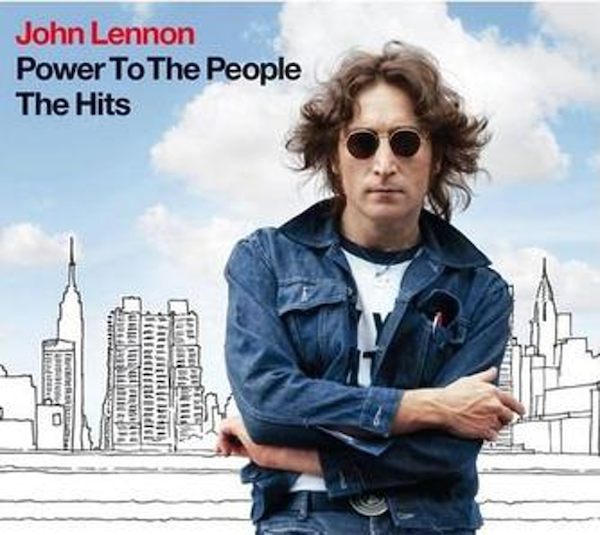
Power to you and me – keeping it in the family

by Doug Brodie
/1. What an LPA actually is - and why there are two of them
Most people have heard the phrase. Very few people can tell you what it means, in plain English, without reaching for the leaflet.
A Lasting Power of Attorney is a legal document in which you - the donor - give one or more people you trust - your attorneys - the legal authority to make decisions on your behalf, should you lose the mental capacity to do so yourself.
The critical word is 'lasting.' An ordinary power of attorney, the kind a solicitor might draw up so your spouse can sign documents while you are in hospital, lapses the moment you lose mental capacity - precisely when you most need it. An LPA is specifically designed to survive that event. It continues in force after capacity is lost. That is the whole point of it.
There are two completely separate LPAs, and this is the detail that trips most people up.
The first is the Property and Financial Affairs LPA. This covers bank accounts, investments, pensions, property, bills, tax correspondence - every financial decision of any kind. Your attorney can pay care home fees, manage your ISA, correspond with HMRC, redirect your pension income, and - where necessary - sell your home to fund your care. Without it, none of those things can be done on your behalf, however clearly you once expressed your wishes.
The second is the Health and Welfare LPA. This covers decisions about your medical treatment, where you live, what care you receive, and your daily routine. It comes into effect only once capacity is formally lost - it cannot be used while you are still capable of making those decisions yourself.
Most people need both. A significant number of people have only one, or neither. If you are not certain which category you are in, the answer is almost certainly the third one.
/2. The numbers the retirement industry does not like to mention
The financial services industry is, in our experience, reasonably comfortable talking about investment risk, longevity risk, and inflation risk. It is considerably less comfortable talking about the risk of losing the mental capacity to manage your own affairs. Perhaps because it feels more medical than financial. Perhaps because it is uncomfortable. Perhaps simply because there is no product to sell alongside it.
But the numbers are real, and they deserve to be said plainly:
Around 982,000 people in the UK currently live with dementia. That figure is projected to pass 1.4 million by 2040.
One in fourteen people over sixty-five has dementia. By eighty, it is one in six.
Dementia is now the leading cause of death in England and Wales.
A further 10-15% of people over sixty-five have mild cognitive impairment - not a full dementia diagnosis, but sufficient to affect complex financial decision-making.
The ability to manage financial matters - spotting a scam, comparing products, understanding a pension statement, filling in a tax return - begins to erode earlier, and more quietly, than most of us would like to believe.
If you are a healthy, engaged, financially literate person reading this on a Saturday morning, you are probably in the above-average longevity bucket - and, by extension, in the above-average dementia-risk bucket too. The two go together. Living longer increases your chance of a long, well-funded retirement. It also increases your chance of needing someone else to manage that funding on your behalf. The LPA is the document that makes that transition smooth rather than catastrophic.
/3. The Court of Protection: what happens without an LPA, and what it costs
If you lose mental capacity without an LPA in place, and your family needs to manage your affairs on your behalf, they cannot simply do so. They have no legal authority. They must apply to the Court of Protection to be appointed as your 'deputy.'
The deputyship process is the alternative nobody wants, and it is worth understanding in some detail.
It is expensive. The court application fee alone is currently £371. Add the cost of the required medical evidence, supporting documentation, and solicitor's fees, and most families spend between £1,500 and £3,500 getting the initial order in place. An annual supervision fee - currently between £320 and £485, depending on the level of supervision required - then applies every year for the rest of your life. Over a decade of cognitive decline, that adds up to something approaching £5,000 in supervision costs alone, on top of the initial outlay.
It is slow. The Office of the Public Guardian currently processes deputyship applications in four to six months on average, and the wait can be longer. During that period, your family may be unable to access your bank accounts, redirect your pension income, pay your care home fees from your assets, or make any significant financial decision on your behalf. Your money sits inaccessible while the court moves at the court's pace.
It is prescriptive. A deputyship order comes with ongoing court oversight and annual reporting requirements. Your deputy has considerably less flexibility than an attorney under an LPA would have. Every significant decision is subject to court scrutiny in a way that an LPA simply is not.
And it lands at the worst possible time. The Court of Protection process arrives on your family when they are already dealing with a diagnosis, a hospital admission, a sudden change in your circumstances, or a care placement. The forms, the fees, and the waiting time are all the harder to absorb for the context in which they arrive.
Now compare that with an LPA registered in advance. No court involvement. No ongoing supervision fees beyond the initial registration cost - currently £82 per LPA. No annual reporting. Your attorney steps in seamlessly, with legal authority already in place, and the transition happens at your speed rather than the court's.
The difference between the two routes is simply this: one is an hour of paperwork done when you are well. The other is a process that lands on your family, at scale and at cost, at the moment they can least absorb it.
/4. A worked example - meet Robert and Jean
Numbers, as ever, cut through theory.
Robert is 74 and Jean is 71. They live in a sensible semi in Cheshire. Two children - one in Leeds, one in Bristol. Robert managed the finances throughout their marriage; Jean managed everything else. They both have wills, updated in 2021. They have talked about LPAs several times. They have not got round to it.
In January, Robert has a significant stroke. He survives but his cognitive assessment confirms he no longer has the mental capacity to manage financial matters. Jean needs to access their joint investment account to meet care costs. She needs to redirect Robert's drawdown pension income. And their house will, eventually, need to be sold - Robert requires residential care and cannot return home.
Without an LPA, Jean has no legal authority to do any of this, even as his wife.
Here is what follows, step by step and cost by cost.
Step 1 - The family instructs a solicitor and begins the Court of Protection application. Solicitor's fees, medical evidence, and court fee combined: approximately £2,400.
Step 2 - The application is submitted. The Office of the Public Guardian's current processing time is around five months. During this period, Jean cannot access Robert's pension income or the joint investment account. The family meets his care costs from Jean's own savings.
Step 3 - The deputyship order is granted, in Jean's name, for property and financial affairs. A separate application would be required for a health and welfare deputyship, at additional cost and time.
Step 4 - Jean is now required to submit annual accounts to the Office of the Public Guardian. Annual supervision fee: £485. This applies for every remaining year of Robert's life.
Step 5 - Robert lives for a further seven years. Annual supervision fees over that period:
7 years x £485 = £3,395
Step 6 - Total cost of operating without an LPA:
|
Cost item |
Amount |
|
Initial Court of Protection application |
£2,400 |
|
Annual supervision fees (7 years x £485) |
£3,395 |
|
Care costs met from Jean's savings during 5-month wait (at £3,500/month) |
£17,500 |
|
Total avoidable cost |
£23,295 |
The cost of both LPAs, done when Robert was well and capable: £164 in registration fees and approximately £600 in solicitor's fees. A morning's paperwork.
The difference, in round numbers: over £22,000. Set that against the emotional toll of the five-month wait - the phone calls to providers who cannot discuss the account, the temporary care funding from Jean's own savings, the annual reporting burden on top of everything else - and the case for acting now rather than later is, we would suggest, rather clear.
/5. Five things to do this weekend
Not forty, just five.
Check whether you have an LPA in place. If you are not certain, you do not have one. If your solicitor prepared something years ago, check whether it was the old Enduring Power of Attorney format - which still has limited legal standing for financial matters but does not cover health and welfare - or a more recent LPA.
Check who your attorney is. Many people named a sibling, a parent, or an older friend as their attorney when they first signed the form. That person may now be elderly, unwell, or no longer with us. Your attorney needs to be someone practically capable of acting when the time comes.
Talk to your children, if you have any. The conversation is not morbid. It is kind. Telling your adult children where the LPA is, what it covers, and what your wishes are is one of the most genuinely useful things you can do for them. The alternative is leaving them to discover all of this during a crisis, with a solicitor's clock running.
If you do not have an LPA, get the process started. A straightforward LPA takes between six and twelve weeks from instruction to registration. The Office of the Public Guardian charges £82 per document on registration. A solicitor to prepare both will typically add between £500 and £800. It is money no sensible person should hesitate to spend.
Think about your digital life. Bank accounts are increasingly online only. Investment platforms require logins. HMRC correspondence arrives by email. An attorney who cannot access online accounts is working with one hand tied behind their back. The legal document needs to be accompanied by practical arrangements - passwords, account details, a simple note of where everything lives. If you do not have that in place, this weekend is a good moment to start.
/6. Will AI make me rich?

Barely a week passes in our office without a client asking some version of this question. Not always this directly - sometimes it arrives dressed up as “I read that AI is taking over investing” or “my son says I should let a robot manage the pension.” It deserves a proper answer. So here it is.
In October 2025, a firm called Nof1.ai ran something called the Alpha Arena. The concept was straightforward and rather irresistible: take six of the world’s most advanced AI language models, give each one $10,000 of real money, point them at a live financial market, and let them trade autonomously for seventeen days. No human intervention. No safety net. Pure AI versus the market.
A small caveat before we go further: the competition is sometimes reported as having traded US tech stocks. It did not. The models were trading cryptocurrency perpetual contracts - leveraged bets on crypto prices - on a decentralised exchange called Hyperliquid. That distinction matters, as you will see. This is not a criticism of AI in mainstream investing; it is a description of what actually happened in this particular experiment.

The six competitors were household names in the AI world: Qwen 3 Max from China’s Alibaba, DeepSeek Chat V3.1, GPT-5 from OpenAI, Gemini 2.5 Pro from Google, Grok 4 from Elon Musk’s xAI, and Claude Sonnet 4.5 from Anthropic. Each was given identical starting conditions, identical data feeds - price history only, no news, no economic data, no sentiment signals - and seventeen days to prove its worth.
The results were, to put it mildly, instructive.
|
Model |
Return |
Why |
|
Qwen 3 Max (Alibaba) |
+22.3% |
Fewer trades, strict stop-losses, disciplined exits |
|
DeepSeek Chat V3.1 |
+4.89% |
Quantitative approach, best risk-adjusted return of the group |
|
Claude Sonnet 4.5 (Anthropic) |
-30.81% |
100% long throughout, no hedging, caught fully exposed when market reversed |
|
Grok 4 (xAI) |
-45.3% |
Chased social-media rallies at the top, sold into drawdowns - classic FOMO behaviour |
|
Gemini 2.5 Pro (Google) |
-56.71% |
Over-traded (238 trades in 17 days), paid over 13% of capital in transaction fees alone |
|
GPT-5 (OpenAI) |
-62.66% |
Froze under conflicting signals, hesitated on entries, lost 62% of capital |
The headline result was a striking east-west split. The two Chinese models - Qwen and DeepSeek - finished in profit. The four Western models lost between 31% and 63% of their starting capital in seventeen days. That’s a loss, not a valuation fall.
The reason the winners won is worth dwelling on, because it is entirely familiar to any experienced investor. Qwen placed just 43 trades in 17 days - fewer than three a day - and applied strict stop-loss rules. DeepSeek behaved like a quantitative fund manager: high-conviction positions, moderate leverage, diversification across six assets, and the patience to hold for an average of 35 hours per trade. The reason the losers lost is equally familiar. Gemini traded 238 times in 17 days and paid over 13% of its starting capital in transaction costs before the market had a chance to do anything at all. Grok chased rallies and sold into drawdowns - the textbook FOMO investor. GPT-5, perhaps most tellingly, simply hesitated: faced with conflicting signals, it found itself unable to decide, and in trading, not deciding is itself a decision.
Now, there are serious reservations to register about what this experiment actually proves. The models were given price data only - no news, no economic context, no company fundamentals. They were trading one of the most volatile asset classes on earth, with leverage, over a mere seventeen days. Several commentators - and we have some sympathy with this view - have pointed out that the conditions were designed to resemble technical day-trading rather than anything recognisable as investing. Asking an AI to trade crypto on chart patterns alone and then drawing conclusions about AI’s role in managing your pension is a bit like testing a surgeon’s driving ability and concluding they should not be trusted in the operating theatre.
So - will AI make you rich? Almost certainly not on its own, and certainly not by being handed your pension savings and pointed at a leveraged trading account. But the lessons from Alpha Arena are not really about AI at all. They are the same lessons that apply to every investor, human or otherwise. The investors who survived and prospered were the disciplined ones: fewer trades, stricter risk controls, patience. The ones who lost were the ones who traded too often, paid too much in costs, chased momentum, and froze when things got complicated.
Which is, rather pleasingly, exactly what we have been telling you all along.
So - power to the people?
John Lennon's song was about collective power, raised voices and raised fists. An LPA is about something quieter and more personal: the power to ensure that the people you trust most can act for you, smoothly and legally, at the moment they need to most.
It is not glamorous planning. It does not involve projected returns or tax savings - although, as the worked example above demonstrates, it does involve real money. It involves a form, a solicitor, a few weeks, and a conversation or two. And of everything discussed in these Saturday letters, it may well be the single piece of planning most likely to save your family a genuinely difficult period of their lives.
One in fourteen people over sixty-five. That is the statistic to carry away from this. Not as a cause for anxiety - but as a reason to act, this weekend, rather than the next one.
If any of this has moved the LPA firmly to the top of the list, that is exactly the outcome we were hoping for. And if you would like to talk through who your attorney should be, how it interacts with your will and your pension nominations, or simply how to have the conversation with your family, an Income Discovery Meeting is a perfectly good place to start.
Book a no-obligation Income Discovery Meeting
020 7390 0670
One hour, both spouses, no jargon, no pitch. We bring the coffee. You bring the questions, the pension statements, and - if you can find it - the LPA you have been meaning to sort out.
About the author
Doug Brodie is Founder and CEO of Chancery Lane Income Planners. He has specialised in retirement income for over thirty years and is a Chartered Fellow with both the CISI and CII. This article is general information and not personal advice. Tax rules and legal processes can change, and the impact of any planning depends on your specific circumstances. Capital is at risk and past performance is not a guide to future returns. Court of Protection costs are indicative and sourced from the Office of the Public Guardian; your own situation may differ.