
Slow Down, You Move Too Fast


by Doug Brodie
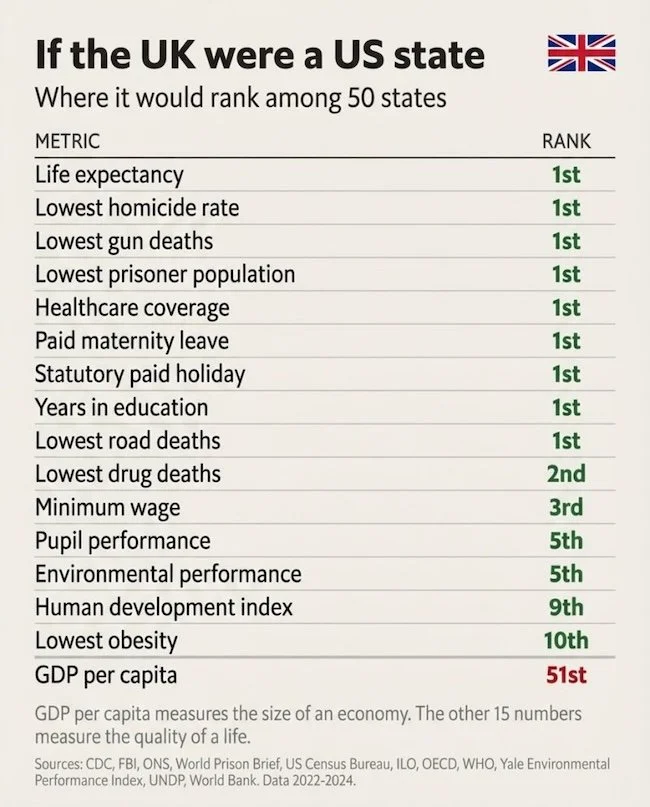
The UK is just a tad smaller than Texas and California combined; glancing at these differences between the US and the UK helps to understand that we are two very different countries.
Q1 – What does America have more of?
a) Gun dealers?
b) McDonald’s?
Q2 – Americans’ likelihood of losing a loved one in a shooting, compared to being left handed?
a) Same likelihood
b) 0.5x, half as likely as being left handed?
c) 2x, twice as likely as being left handed?
Q3 – In the year 2023/24, 2 people were shot and killed by police in the UK. How many were shot and killed by police in the US? (https://policeviolencereport.org/2024/)
a) 102 in the year.
b) 3.4 per day?
The answers are a), c) and b).
The reason for giving you these statistics is to reinforce that US attitudes and pressures on political life are very, very different to the UK – perhaps it’s the idea of ‘dog eat dog’ in US society and business that creates such innovative, global conquering financial behemoths, whereas here in the UK we have a polite society to support us all?
And then on the flip side of US society, they gave us the retirement anthem “That’ll be the day” from Buddy Holly, and the retirement instruction “Feeling groovy” from the inimitable S&G. Ok, before you splutter into your coffee, the proper title of the song is “The 59th Street Bridge Song”.
Simon & Garfunkel released The 59th Street Bridge Song in 1966 - the year, give or take, when most readers of this blog were teenagers. Sixty years on, the chorus is still the best two-line retirement plan ever written:
“Slow down, you move too fast. You got to make the morning last.”
/1. The 10 Minute Retirement Plan
Most retirement plans run to forty pages. Most of them are read once, filed, and never opened again. So here is the ten-minute version - the one that actually fits in your head.
There are, in plain English, four places your pension can go.
One. Buy an annuity. You hand the insurance company your pot; they hand you a cheque every month for the rest of your life. Boring, predictable, and currently paying the best rates in over a decade. A 70-year-old can secure roughly £7,400 a year for every £100,000, level, single life. Hard to beat for the foundation layer.
Here’s the simple maths to work out if that’s good value: at age 70, the life expectancy for a male in the UK is another c18 years. If that flat, non-increasing £7,400 per year was simply spent from cash in your pension each year, then (£100,000 ÷ £7,400) means it will last for 13.5 years.
To last the full 18 years you need 18 x £7,400 from your £100,000 which is £133,200, and to achieve this, you need a 3.2% annual interest rate. By comparison, the 18-year gilt yield is 5.6%, which means you could get £8,960 per year, which is 21% more income per year. But.. if you’ve been blessed with a long life, you’ll run out of money at 88 with the gilt, whereas the annuity will keep on keeping on…
Two. Drawdown. You keep the pot invested, draw what you need, and leave the rest to compound. Flexible, tax-efficient, and the route most retirees now choose. The risk is sequence-of-returns - a bad market in the first five years can do permanent damage to a pot you are actively drawing from. The mitigation is a cash buffer of two to three years of spending.
Three. Take it in chunks. Each ad-hoc withdrawal is 25% tax-free and 75% taxable as income. Useful for one-off costs - the new car, the conservatory, the wedding contribution - without committing to either an annuity or a full drawdown plan.
Four. Mix and match. Annuitise enough to cover the essentials - council tax, food, utilities, insurance, the basic shape of your life - and drawdown the rest for the holidays, the grandchildren and the unexpected. Most of our clients end up here.
The fifth option, which nobody mentions, is the simplest: do nothing yet. Clients of ours know that we like this option. Quite often the security people want is just to know the income is there if / when needed, i.e. the bottom line is covered. If your other income covers the bills, leaving the pension untouched until you actually need it is a perfectly respectable strategy. (Though, as last week's article noted, after April 2027 the IHT sums on that approach change.)
Ten minutes. Four routes. One question worth asking before you pick: Which of these helps us sleep at night?
/2. The Retirement Funded Ratio - your most useful number
The Retirement Funded Ratio (RFR) is, in our view, the single most useful number in retirement planning - and almost nobody outside the actuarial profession has ever heard of it. So, briefly:
Retirement Funded Ratio = Total Assets divided by Total Lifetime Liabilities
Where liabilities means the present value of everything you reasonably expect to spend between now and the day you die.
If the answer is 1.0, you have exactly enough.
If it is below 1.0, you have a problem worth discussing.
If it is above 1.0 - and for most of our clients, it is well above - then you have permission to relax. And, frankly, to spend.
That last point matters more than the maths. Most of our clients come in believing they are not quite secure enough to enjoy themselves. The RFR is the number that tells them, with arithmetic rather than reassurance, whether that belief is true.
A worked example. Meet John and Margaret. Both 68. Married 42 years. Two children, four grandchildren, a Labrador called Hettie. They live in a sensible house in Hampshire that they intend to stay in.
Step 1 - their assets (excluding the home).
|
Asset |
Value |
|
Joint DC pension pots |
£550,000 |
|
ISAs (his and hers, accumulated over 25 years) |
£180,000 |
|
Premium Bonds and cash |
£70,000 |
|
Total liquid wealth |
£800,000 |
Step 2 - their guaranteed lifetime income.
Two full new State Pensions (2026/27 levels): around £24,000 a year combined
Margaret's small DB scheme from her teaching years: £6,000 a year
Total guaranteed income: £30,000 a year, inflation-linked
Step 3 - their desired spending.
They want £48,000 a year - broadly the PLSA "comfortable" standard for a couple, plus a little headroom for travel.
Step 4 - the spending shortfall (the bit the pot has to cover).
£48,000 minus £30,000 equals £18,000 a year needed from assets.
Step 5 - turn that annual shortfall into a present-value liability.
ONS data on a couple aged 68 suggests one of them, on average, will see 90 - so a planning horizon of around 25 years is realistic. To be cautious, we plan for 30.
Discounting £18,000 a year for 30 years at a 2% real rate (i.e. after inflation) gives a present value of:
£18,000 x 22.4 (the 30-year annuity factor at 2%) = £403,200
Step 6 - add a sensible contingency reserve.
Late-life care, home repairs, gifts to children and grandchildren, the unexpected. Call it £100,000.
Step 7 - total lifetime liabilities.
£403,200 + £100,000 = £503,200
Step 8 - the Retirement Funded Ratio.
£800,000 / £503,200 = 1.59
In plain English: John and Margaret have 59% more money than they actually need. They could increase their spending to roughly £62,000 a year and still finish at an RFR of 1.0 - with the home, which we have not counted at all, as a final reserve.
The interesting question, then, is not Can we afford this? They obviously can. The interesting question is Why aren't we?
That, dear reader, is the conversation we have most often. The answer, almost always, is simple inertia. Forty years of saving leaves a habit that does not switch off the moment you stop working. The RFR is, among other things, a gentle antidote to that habit, but remember, wealth is the amount of money you haven’t spent.
/3. The attractions of life in the slow lane
There is an aphorism, of uncertain provenance, that I have come to believe is the most useful sentence in the English language for anybody over sixty-five:
"Patience is the calm acceptance that things can happen in a different order than the one you held in your head."
Not my words and I can’t remember where I read it, but it’s a true-ism. Read it twice.
For forty working years, your job - if you were any good at it - was to make things happen in the order you had planned. Deadlines met. Targets hit. Diaries controlled. Children fed, watered, schooled and dispatched. The whole apparatus of professional adult life is a sustained exercise in imposing order on a world that, frankly, prefers chaos.
Retirement is the moment you put down the clipboard.
The slow lane is not a euphemism for decline. It is a recalibration. The morning that used to be carved into thirty minute blocks becomes a single, generous unit of time. The garden gets weeded when it needs weeding, not when the calendar says. The book gets finished when the book gets finished. The grandchildren turn up unannounced and stay for tea, and the tea takes two hours. Dither in a book shop.
There is a quiet snobbery, in our culture, against slowness. ‘Busy’ is celebrated. Productive is praised. But after a certain age, ‘busy’ becomes a tell - a sign of someone still seeking the validation that work used to provide. The genuinely contented retirees we meet are not busy. They are unhurried. There is a difference, and the difference is the whole point.
Take longer over breakfast. Walk the long way to the post box. Let the kettle boil twice. Read the paper from the back. The morning is yours. So, increasingly and gloriously, is the rest of the day. Be Bob and Paul – do nothing but chat. You can’t do that with your house, your car, your boat, your diamonds… only a mate.
/4. Say "yes" more - and where it will take you
There is a curious thing about the diary in retirement: nobody fills it for you anymore.
For forty years your week arrived pre-populated. Meetings, deadlines, school runs, parents' evenings, the in-laws on Sunday, the dentist on Tuesday. Now the page is blank. And blankness, it turns out, is not as restful as we imagined when we were forty-five and exhausted.
The cure is small, free, and requires no spreadsheet.

“Say yes more.”
Yes to the neighbour's drinks. Yes to the cycling / swimming / walking group. Yes to the choir, even if you cannot read music. Yes to the watercolour class, the bridge evening, the book club, to Parkrun, that gig, the village fete committee. Yes to the cousin you have not seen since 1987. Yes to the long weekend in Whitby that the friends keep mentioning. Yes to the grandchildren, even at short notice, even when you had other plans.
Yes will take you, in our experience, to roughly the following places:
To a wedding in Italy you nearly declined.
To a hospital ward holding a friend's hand.
To a Tuesday morning swim that becomes the highlight of your week.
To a grandchild's nativity play, via two trains and a taxi.
To a country lane you have never driven before, because somebody mentioned a good pub at the end of it. (Simply getting lost – Pourquoi pas?)
To a new friendship in your seventies, which the science says is the single best predictor of a long, healthy old age.
To, occasionally, regret. But less often than ‘no’ will take you.
The actuarial truth, for which we apologise in advance, is that the diary genuinely does have a finite number of pages left. Filling them is not greed, it’s gratitude.
And the wonderful, slightly ridiculous thing about retirement is that almost nothing on the diary has to be done. It is all, every single entry, voluntary. The yes is the whole point.
/5. Old money in the UK - how it persists
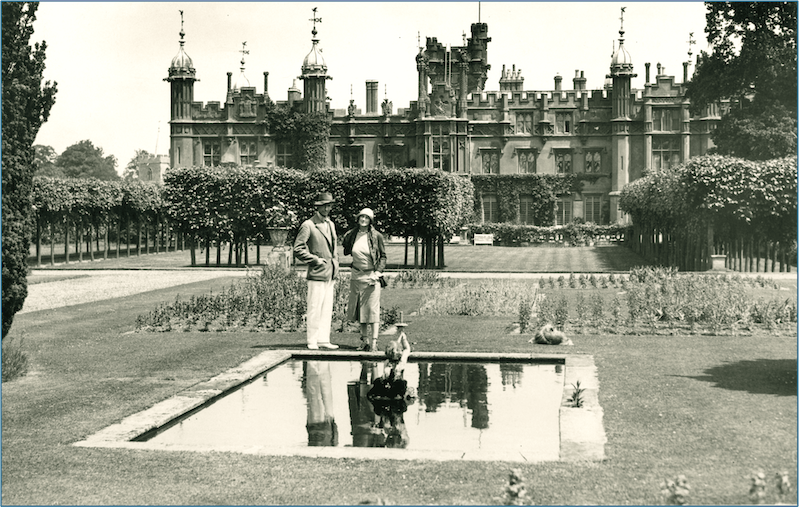
A short observation, by way of conclusion. There is a phrase in the financial press - old money - that gets used as if it referred to something entirely separate from the wealth most of you have accumulated. It does not. It refers, mostly, to the same kind of wealth, only managed slightly differently across more generations.
The features of British old money - and over thirty years I have sat across the table from a fair sample of it - are surprisingly few. There are five.
One. They talk about it.
The single most striking habit of old-money families is that money is a topic at the dinner table from quite a young age. Children of ten know roughly what the family has, what it does, and where it came from. There is no Big Reveal at age thirty, or worse, at the reading of the will. Information compounds across generations rather more reliably than capital does.
Two. They use trusts.
Not the elaborate offshore kind - the perfectly ordinary UK discretionary and life-interest trusts, set up by family solicitors, that ring-fence assets across generations and survive divorces, bankruptcies, and the occasional wayward grandchild. Trusts, properly understood, are not tax shelters. They are governance structures. They keep family wealth pointed in the same direction even when the family itself is pointing in several.
Three. They give early.
The seven-year gifting rule and the regular-gifts-out-of-surplus-income exemption are not exotic devices. They are mainstream UK IHT planning, and old money uses them ruthlessly. By the time the senior generation dies, much of the wealth has already passed - educationally, residentially, sometimes literally - to the next generation. The estate that passes through probate is the tip, not the iceberg.
Four. They live below their means.
The aristocrat in the patched corduroys is a cliche because it is true. Old money is, almost universally, less ostentatious than new money. Capital is preserved by under-spending the income, not by chasing returns. The maths is simple. The discipline is not.
Five. They apprentice the next generation.
Old-money families involve children and grandchildren in the stewardship of capital long before any of it is theirs. They sit in on the family-trust meeting (perhaps just listening, at first). They learn, over years, how investment decisions are made, how charitable giving is decided, how the family agrees on something difficult. By the time they inherit, they are not surprised by it. They have been, in effect, apprenticed in capital.
None of this is genetic. None of it is gated by class. The boomer reading this column has, in many cases, accumulated more in a working lifetime than two or three generations of supposed old money managed between them. The question is not whether you have the wealth. You do. The question is whether the family - plural, across generations - knows what to do with it.
That, more than any IHT arithmetic, is what determines whether your grandchildren are still talking about your sensible decisions in 2080.
So - feeling slightly groovier?
Three articles in three weeks have, perhaps, asked too many questions. Annuities. IHT. Retirement Funded Ratios. Trusts. Saying yes. Slowing down. Old money. The thread running through all of them is the one we keep coming back to: most of you have done the hard part.
The saving. The working. The living below your means. The remaining work - the lighter, more interesting work - is figuring out how to enjoy it, share it, and pass it on, in roughly that order.
If any of this has rung a quiet bell, that is precisely the feeling that should prompt a phone call. Not because we will rush you - we don't do that - but because an hour of our time is free, and the cost of leaving these conversations until later can quietly mount up.
Two hours, both spouses, no jargon, no pitch. We bring the coffee. You bring the diary, the pension statements, and a willingness to consider that you may already have enough. Be more Ted!
Doug
About the author
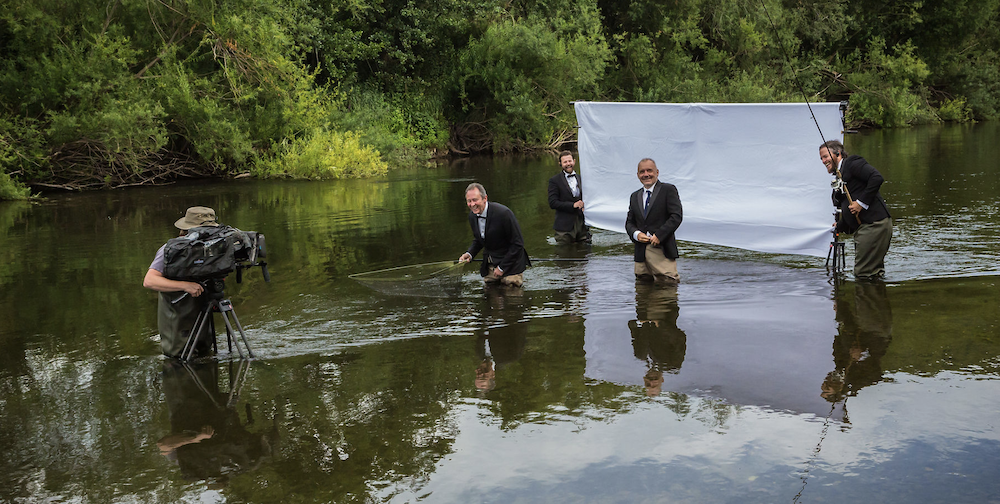
Doug Brodie is Founder and CEO of Chancery Lane Income Planners. He has specialised in retirement income for over thirty years and is Chartered with both the CISI and CII. This article is general information and not personal advice. Tax rules can and do change, and the impact of any planning depends on your specific circumstances. Capital is at risk and past performance is not a guide to future returns. The Retirement Funded Ratio illustration uses simplifying assumptions, including a 2% real discount rate; your own figures will differ.