
Stop the Pigeon!

by Doug Brodie
In this blog:
/1. Money market funds - not a bank account, and the difference matters
/2. The wealth you did not spend - and two events worth your diary
/3. Patience, Amazon, and the difference between $100 and $6
/4. What is the State Pension actually worth?
/5. Annuities: the real rates, side by side
/6. “Gee up, Neddy!” - is retirement the time to buy a horse?
/1. Money market funds - not a bank account, and the difference matters
If you look at your pension fund list and you see something labelled "cash," there is a reasonable chance it is not cash in the way you mean the word. It may be holding a money market fund - and that is a meaningfully different thing.
A bank deposit is a loan you make to a single bank, protected up to £120,000 by the Financial Services Compensation Scheme, earning whatever rate that bank decides to pay. A money market fund holds a spread of very short-dated instruments issued by banks, governments, and large companies worldwide, managed professionally, typically tracking SONIA (the overnight interbank rate) very closely. The fund is not FSCS-protected in the same way, but the diversification of issuers and the short maturities provide a different and arguably more robust form of protection.
Here is how three of the best-known funds are actually constructed.
Royal London Short Term Money Market Fund (Class Y)
OCF: 0.10% per year. All assets are classified as money market instruments - short-dated, liquid, and designed to hold their value. Despite the "Royal London" name, the fund is genuinely global: the UK accounts for roughly 33% of the portfolio, Canada around 21%, Australia 10.5%, France 6.7%, Sweden 5.75%, and Singapore and the Netherlands make up most of the remainder. The underlying investments are certificates of deposit, commercial paper, and floating rate notes issued by large financial institutions and governments. The benchmark is SONIA. Not cash in the bank as you might know it.

Vanguard Sterling Short-Term Money Market Fund (Class A)
OCF: 0.12% per year. Vanguard's approach is similar in spirit - short-dated bank certificates of deposit, commercial paper, and short corporate bonds - and also benchmarks to SONIA. Vanguard uses a Variable Net Asset Value (VNAV) structure, which means the price moves with the market rather than being fixed at £1. That is a more honest reflection of what the fund actually holds, and it means tiny price movements are normal rather than alarming. This fund is available directly through Vanguard's platform and through most major SIPPs and ISAs.

BlackRock ICS Sterling Liquidity Fund (Premier Accumulating)
OCF: 0.10% per year. Fund size: approximately £46.5 billion as at May 2026. This is one of the largest institutional money market funds in the UK. The portfolio construction is slightly different from the two above - roughly 34% in cash and near-cash equivalents, 18% in short bonds, around 6% in alternative short-dated strategies, and the remaining 40% or so in instruments that data providers classify as "non-classified". Counterparties include major global banks such as Nationwide, Toronto-Dominion, and ING. Widely used by pension schemes, it is a serious institutional vehicle, not a retail afterthought.

SL BlackRock Cash Pension Fund - the pension wrapper version
Here is where it gets interesting for anyone with a Standard Life pension. The SL BlackRock Cash Pension Fund invests into the underlying BlackRock Cash Fund - but it does so inside a Standard Life pension wrapper, and that wrapper comes at a cost.
Based on the most recent available factsheet (Q1 2026 - Standard Life does not always publish these as frequently as independent fund managers), the charges were as follows:
Annual Management Charge (AMC): 1.08%
Additional expenses: 0.05%
Total Fund Charge: 1.13% per year
The underlying fund itself holds much the same instruments as the institutional version above - certificates of deposit (31%), time deposits (29%), financial commercial paper (18%), floating rate notes (10%), asset-backed commercial paper (7%), and investment company units (4%). The credit quality is high and the maturity profile is very short.
But 1.13% per year is a meaningful drag on a fund earning somewhere between 4% and 5% gross at current rates. If the gross yield is 4.5% and the charge is 1.13%, you are netting 3.37%. Compare that with the institutional BlackRock fund at 0.10% - netting closer to 4.4% on the same underlying assets.
The lesson is not that Standard Life's version is bad - the underlying fund is sound. The lesson is that the wrapper matters as much as the fund. If you are sitting in a pension cash fund and have not looked at the charge in a while, now would be a good time to look. The difference between 0.10% and 1.20% on a £200,000 pension cash holding is roughly £2,200 a year.
/2. The wealth you did not spend - and two events worth your diary
There is a definition of wealth that your accountant will never use, but which is entirely correct: wealth is the sum of everything you could have bought and chose not to.
The car that stayed on the forecourt. The kitchen extension that stayed in the planning stage. The holiday that never quite got booked. The watch you admired in a window and walked past. All of that is still yours - in one form or another, in the portfolio or the pension. The question, which we come back to later, is whether that was the right decision in every case.
If you are going to decline to spend money on beautiful, impractical, wildly engineered objects - and you may well be right to - you might at least enjoy them at close quarters without opening your wallet.

London Concours, 9 to 11 June 2026
The London Concours is held in the grounds of the Honourable Artillery Company in the City, and it is one of the finest collections of automotive art assembled each year in Britain. The 2026 classes include the Porsche Sonderwunsch (factory special-order cars that never appeared in any catalogue), Dream Cars, Alfa Romeo, and Icons Remastered. These are not museum pieces in glass cases - they are driven in, gleaming, under their own power, by owners who use them. Tickets are available at londonconcours.co.uk. Three days, central London, no purchase required.
Le Mans Classic, 2 to 5 July 2026
If static admiration is not enough and you want to watch a pre-1981 Ferrari, a Jaguar D-Type, or a Gulf-liveried Mirage actually being raced at night around the Circuit de la Sarthe, then Le Mans Classic is the event. Held every two years, it fills the track with the most valuable racing cars in the world and then points them at the Mulsanne straight. The combination of exhaust noise, circuit history, and machinery is, by all accounts, unrepeatable.
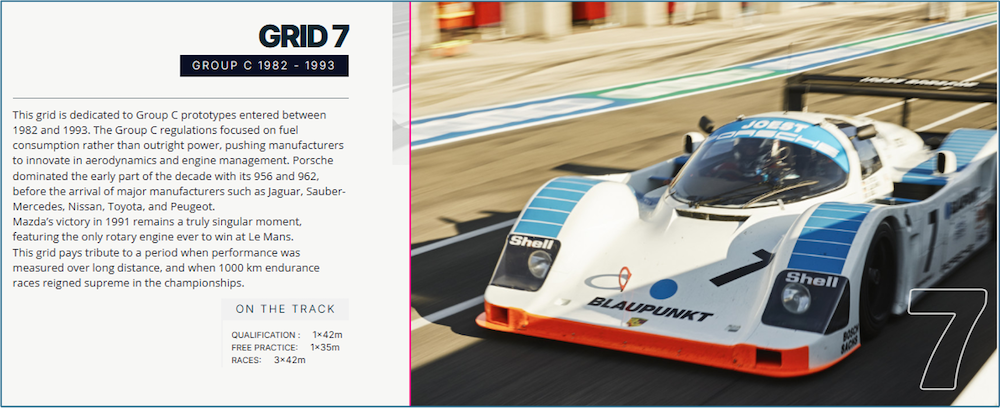
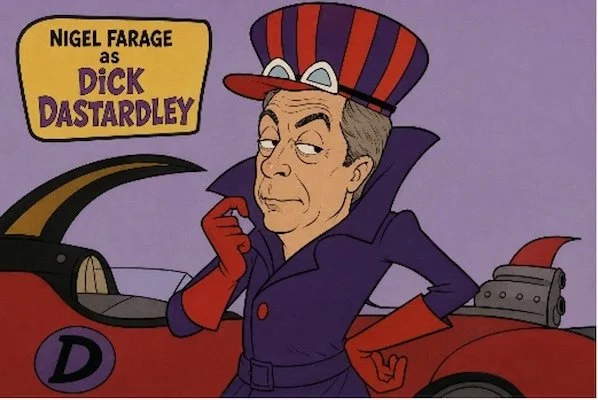
Neither event costs the price of a new car. Both give you something to talk about at the next Income Discovery Meeting that isn't a Wacky Races version of a government.

/3. Patience, Amazon, and the difference between $100 and $6
There is a line attributed to Warren Buffett, though variations of it appear in many places, that investing is the process of transferring money from the impatient to the patient. It is, like most of his observations, simple and mercilessly accurate.
The impatient had a spectacular run in the late 1990s. Three companies illustrate what happens when enthusiasm outruns economics.
Pets.com
Pets.com launched in February 2000 and filed for bankruptcy in November 2000 - 268 days from launch to liquidation. At its peak, it had a market capitalisation of roughly $290 million. Its business model involved buying pet food in bulk and posting it to customers at prices that did not cover the cost of the postage. The sock puppet mascot became more famous than the product. The sock puppet survived the company.
Webvan
Webvan raised over $800 million to build automated grocery warehouses across America. The warehouses were built. The customers did not come in sufficient numbers. It collapsed in 2001 having spent most of the money.
Boo.com
Boo.com spent around $135 million over 18 months trying to build a global online fashion retailer in 1999 and 2000. It burned through the cash, failed to ship product reliably, and ceased trading in May 2000. The administrators sold the brand name for $375,000 - one quarter of one percent of what had been raised.
These were not obscure companies. They were funded by serious investors, covered on the front pages, and taken seriously by people who should have known better.
Now consider Amazon.
In 1999, Amazon shares traded at close to $100. By late 2001, following the dotcom collapse, they had fallen to $6. A reduction of 94%. At that price, the market was valuing the entire company at less than its annual revenues. Many investors who had bought at $80 or $90 sold at $10 or $20, having concluded that the model was broken.
The model was not broken. The investors had simply confused a short-term price collapse with a permanent loss of value.
Amazon at $6 in 2001 was not Pets.com. It had revenues. It had infrastructure. It had customers who came back. It had Jeff Bezos, who was quietly building a logistics network that nobody else understood yet. Twenty-five years later, the share price is measured in thousands of dollars.
The three dotcom failures and Amazon all looked similar from the outside in 2001 - all down sharply, all associated with the same bubble. The difference was in the underlying business. Identifying that difference early is the work of a fund manager. Holding on while the market panics is the work of the investor.
Patience is not passivity. It is the deliberate decision to remain invested through discomfort, because you have done the work to understand what you own.
/4. What is the State Pension actually worth?
Most people think of the State Pension as income - £241.30 a week, £12,547 pa, paid every four weeks, rising each April by the triple lock. That is correct as far as it goes. But it is worth asking a more interesting question: if the State Pension were an asset you could buy in the market, what would it cost?
The most honest comparison is with an index-linked gilt - a UK government bond that pays income rising in line with the Retail Price Index, backed by the same government that pays the pension, with the same counterparty risk (which is to say, very nearly none in sterling terms). As at 12 May 2026, the 10-year index-linked gilt real yield is 1.65% above RPI.
The calculation is straightforward.
Step 1 - The income we are trying to replicate
The full new State Pension for 2026/27 is £241.30 per week.
£241.30 x 52 weeks = £12,547.60 per year (we will call it £12,548 for neatness).
Step 2 - The capital required to generate that income from index-linked gilts
If the real yield is 1.65%, the capital required is the annual income divided by the yield expressed as a decimal.
Capital = £12,548 / 0.0165 = £760,485
To replicate the State Pension using index-linked gilts at today's yields, you would need to invest approximately £760,000.
Step 3 - The question you were asked
Would you accept £200,000 as a lump sum in exchange for giving up your State Pension?
At a 1.65% real yield, £200,000 buys you the following annual income:
£200,000 x 0.0165 = £3,300 per year.
You would be giving up £12,548 per year of index-linked, government-guaranteed income in exchange for the ability to generate £3,300 per year from that same capital on equivalent terms. The pension is worth roughly 3.8 times what you are being offered.
The State Pension is not, of course, for sale. Nobody is offering you £200,000 to give it up. But the exercise reveals something important: the State Pension is an enormously valuable asset that most people systematically undervalue, because it arrives as income rather than as a capital sum.
There are caveats worth noting. The index-linked gilt calculation assumes the full pension at current rates and does not account for the State Pension age rising to 67 by 2028. Nor does it account for longevity - the longer you live, the more the pension is worth relative to any finite capital sum. For someone aged 66 with a reasonable life expectancy, the longevity argument runs strongly in favour of the pension.
If you are considering voluntary National Insurance contributions to fill gaps in your record, the same arithmetic applies. Each additional qualifying year currently costs £824 in Class 3 contributions. Each additional year of full pension is worth roughly £357 per year (one thirty-fifth of £12,548). At a 1.65% real yield, that £357 per year of additional index-linked income has a capital value of approximately £21,636. You are paying £824 to acquire an asset worth £21,636 in index-linked gilt terms. It is, in most cases, one of the best financial decisions available to anyone approaching pension age with gaps in their record.
/5. Annuities: the real rates, side by side
Annuities have had a difficult reputation for twenty years. Some of that reputation was earned - the rates in the years following the financial crisis were genuinely poor, and the pension freedoms of 2015 gave people sensible reasons to look elsewhere. But rates have moved considerably since then, and the table below - using quotes from 13 May 2026 - tells a more interesting story than most people expect.
All quotes are based on a £100,000 pension pot, paid monthly in arrears.
Age 60
| Options | Monthly income | Annual income | Yield equiv. |
| No RPI, no spouse, no guarantee | £585 | £7,023 | 7.02% |
| No RPI, no spouse, 5-year guarantee | £583 | £7,001 | 7.00% |
| No RPI, spouse (100%), no guarantee | £534 | £6,415 | 6.42% |
| No RPI, spouse (100%), 5-year guarantee | £534 | £6,415 | 6.42% |
| RPI-linked, no spouse, no guarantee | £373 | £4,484 | 4.48% |
| RPI-linked, no spouse, 5-year guarantee | £372 | £4,474 | 4.47% |
| RPI-linked, spouse (100%), no guarantee | £327 | £3,924 | 3.92% |
| RPI-linked, spouse (100%), 5-year guarantee | £327 | £3,924 | 3.92% |
Age 65
| Options | Monthly income | Annual income | Yield equiv. |
| No RPI, no spouse, no guarantee | £646 | £7,762 | 7.76% |
| No RPI, no spouse, 5-year guarantee | £643 | £7,722 | 7.72% |
| No RPI, spouse (100%), no guarantee | £573 | £6,878 | 6.88% |
| No RPI, spouse (100%), 5-year guarantee | £573 | £6,878 | 6.88% |
| RPI-linked, no spouse, no guarantee | £437 | £5,255 | 5.26% |
| RPI-linked, no spouse, 5-year guarantee | £436 | £5,235 | 5.24% |
| RPI-linked, spouse (100%), no guarantee | £369 | £4,434 | 4.43% |
| RPI-linked, spouse (100%), 5-year guarantee | £369 | £4,434 | 4.43% |
The cost of each option, made visible
Take a 65-year-old with £100,000 and no additional options. The starting income is £646 per month.
Adding a spouse's benefit costs -£73 per month (from £646 to £573). That is £876 per year you are paying to ensure your spouse receives income if you die first - insurance, in its purest form, and probably cheap insurance if your spouse is younger and healthy.
Adding RPI-linkage costs -£209 per month at the same age (from £646 to £437). You are, in effect, buying a rising income in exchange for a lower starting point. Whether that exchange makes sense depends on how long you expect to live and what you expect inflation to do. At current RPI of around 4.1%, the break-even point - the year at which the RPI-linked income overtakes the flat income - arrives relatively quickly for someone aged 65.
Adding both spouse's benefit and RPI linkage reduces the starting income to £369 per month - a reduction of £277 per month versus the simplest option. That £277 per month is the premium for a fully inflation-protected, two-life annuity.
The 5-year guarantee costs almost nothing
For a 65-year-old, the difference between having a 5-year guarantee and not having one is £3 per month (from £646 to £643 on the simplest version). The guarantee means that if you die within five years, payments continue to your estate until the fifth anniversary. Given the trivial cost, there is rarely a good reason to decline it.
The age effect is significant
Waiting from 60 to 65 increases the flat rate income from £585 to £646 per month - an improvement of £61 per month on the same £100,000. Over a year that is £732. Over ten years that is £7,320 of additional income per £100,000. Against that, you need to weigh the five years of income foregone between 60 and 65. The maths of deferral depends heavily on health and life expectancy, and it is one of the central questions in our Income Discovery Meeting.
The honest comparison with drawdown
An annuity rate of 7.76% at age 65 with no additional options compares favourably with what a balanced drawdown portfolio needs to earn - net of charges, before sequence risk - to achieve the same income sustainably over a twenty-year horizon. Drawdown offers flexibility, the prospect of capital growth, and the ability to leave a legacy. An annuity offers certainty, simplicity, and the knowledge that the income arrives regardless of what markets do. Neither answer is always right. The most appropriate solution for most retired couples might involve some of both.
/6. “Gee up, Neddy!” - is retirement the time to buy a horse?
Several of our clients are active horse people. From Wimbledon Common to the Cotswold lanes, from the Borders to the Bordeaux vineyards, they are out hacking, jumping and competing well into their sixties and seventies. If anything confirms that equestrianism has no meaningful age bar, it is watching a client describe a clear round at a local show with more animation than they ever bring to a portfolio review.

For those considering getting back into the saddle - or stepping up from weekend riding lessons to ownership - the question is a practical one: what does it actually cost? Not the brochure version, but the honest version, with real numbers from real yards.
The short answer is: more than you probably think, and worth every penny if you have the right horse and the right setup. Here is the full picture.
The purchase price - one-off but significant
A leisure horse suitable for hacking and general riding costs roughly £2,000 to £7,000. A horse with competition experience - something capable of affiliated jumping, eventing, or dressage - runs from £8,000 to £20,000 or more. A sensible all-rounder that hacks alone and in company, passes a five-stage vetting, and will forgive an occasional mistake typically sits in the £5,000 to £8,000 bracket. Below that price point, experienced dealers will tell you that something usually explains the discount.
Before buying, budget for a five-stage pre-purchase vetting - that is a full lameness, wind, heart and eye examination by an independent vet. A five-stage exam costs £250 to £350 before any X-rays, which add £150 to £350 per set of views. On a horse costing £7,000 or more, skipping this is a false economy. Lameness at purchase becomes very expensive lameness in ownership.
Then add tack and equipment at the start. A well-fitted saddle alone is £500 to £1,500 second-hand, or £1,500 to £3,000 new. Bridle, saddle pad, rugs (stable, turnout, mid-layer), grooming kit, first aid box, and basic rider kit bring the starting total to another £1,500 to £3,000 on top of the horse itself.
| Purchase item | Typical range |
| Horse (leisure all-rounder) | £5,000 - £8,000 |
| Five-stage pre-purchase vetting (inc. X-rays) | £300 - £700 |
| Tack and equipment | £1,500 - £3,000 |
| Transport to yard | £150 - £400 |
| Total first-year purchase costs | £7,000 - £12,000 |
Livery - the biggest ongoing number
Livery is the cost of housing your horse at a yard and is almost always the largest single line in the budget. How much you pay depends almost entirely on where you are and what you want the yard to do.
The most comprehensive UK survey on the subject was presented at the National Equine Forum in March 2026, drawing on 768 responses from 81 UK counties. The median figures are around £200 per month for DIY livery and £600 to £900 per month for full livery. In the most extreme cases, a £20,000 annual gap was recorded between the lowest and highest full livery prices for a single horse.
There are three main arrangements to understand:
DIY livery: means you rent the stable and field and do everything yourself - feeding twice daily, mucking out, turning out, bringing in. You are present every day, regardless of weather. The national average for DIY livery is around £201 per month, though individual yards range from £75 to £500 per month for the same service.
Part livery: means the yard does the daily jobs (mucking out, turning out, feeding) and you ride and manage the finer points. Costs run from £400 to £700 per month outside the south east.
Full livery: means the yard manages everything - feeding, mucking out, grooming, exercising when you are not there, holding for the farrier and vet. The national average for full ridden livery is just over £1,000 per month, with a recorded range of £450 to £2,125 per month nationally. In round numbers, £12k to £25k per year.
Location adds a significant premium. In Surrey or Hertfordshire, full livery now regularly tops £1,200 per month. A client keeping a horse near Wimbledon on full livery should budget £1,100 to £1,300 per month. In the Cotswolds, expect £700 to £1,000 per month. In Carlisle and the North, good full livery runs from £500 to £800. In Bordeaux, French yard costs in rural areas typically run €400 to €700 per month for full board.
Farrier
Every horse needs the farrier every four to six weeks, shod or not - a horse with neglected feet becomes a lame horse rapidly. Annual farrier costs run from £500 to £1,500 depending on whether the horse is shod on all four feet or going barefoot. A fully shod horse with a good farrier in the south east costs around £90 to £120 per visit, eight to nine visits per year - call it £800 to £1,100 annually.
Feed and forage
On full livery, basics are included, though premium supplements are usually charged extra. On part or DIY livery, budget separately: hard feed £40 to £100 per month, supplements £20 to £60 per month. A horse in moderate work on good hay runs to around £80 to £150 per month on feed alone.
Veterinary care
Budget two separate numbers - routine and emergency. Routine annual care (vaccinations, dental, worming, annual check) comes to roughly £300 to £500 per year for a healthy horse in steady work. Emergency care is the variable that catches owners out - a mild colic visit may cost £300, while colic surgery at a referral hospital can reach £5,000 to £7,000. Maintaining an emergency reserve of £2,000 to £3,000 is strongly recommended alongside insurance.
Insurance
Standard vet fee insurance for a leisure horse costs approximately £25 to £40 per month. Comprehensive cover, including death, theft, and higher vet fee limits, runs £40 to £60 per month. For most retired leisure owners, comprehensive cover at £40 to £55 per month is the right level - the vet fee limit should be at least £5,000 per incident, and public liability cover is important if the horse is ever on a public bridleway.
Other costs that accumulate quietly
Physiotherapy: £50 to £80 per session, several times a year. Clipping: £50 to £90 per clip. Competition entries: £50 to £200 per event. Specialist transporter: £1.50 to £2.50 per mile. Rug replacement: £150 to £300 per year. Saddle fitting: £50 to £100 per annual check, adjustments extra.
The full-year picture - three realistic scenarios
| Scenario | Annual cost range |
| DIY livery, rural yard, hacking and light jumping only | £6,000 - £8,500 |
| Part livery, Cotswolds or North, some local competing | £10,000 - £14,000 |
| Full ridden livery, Surrey or near London, regular competition | £16,000 - £22,000+ |
These figures assume one horse, no major veterinary incidents, and a straightforward season. Add 10 to 15% contingency for the unexpected - and the unexpected, with horses, should be considered probable rather than possible.
Is it worth it?
That is not really a financial question. The clients we know who own horses are not doing it for the return on investment. They are doing it for the early morning hack across empty fields, the rhythm of the yard, the problem-solving that riding demands, the community of the stable, and the simple fact that it makes them happy in a way that is difficult to replicate.
What is worth saying - and this links directly to the IHT conversation from recent weeks - is that for clients with pension and investment wealth otherwise destined for a 40% IHT charge on the way to their children, a horse at £12,000 to £18,000 a year is a perfectly rational deployment of retirement income. It is a cost that arrives monthly, it comes from the pension or ISA rather than accumulating further, and it buys something real and daily and physical that no portfolio can replicate.
The tax-efficient choice, in many cases, is to enjoy more of the money now. A horse is not the only way to do that. But for the right person, it is a rather good one.
About the author
Doug Brodie is Founder and CEO of Chancery Lane Income Planners. He has specialised in retirement income for over thirty years and is a Chartered Fellow with both the CISI and CII. This article is general information and not personal advice. Tax rules can change, and the impact of any planning depends on your specific circumstances. Capital is at risk and past performance is not a guide to future returns. Annuity rates are correct as at 13 May 2026 and subject to change. Charges information for the SL BlackRock Cash Pension Fund is based on the most recently available factsheet (Q1 2026) and may have changed.